

Vermiculite 5 liters
4,99 €
Vermiculite 5 liters
In stock
Description
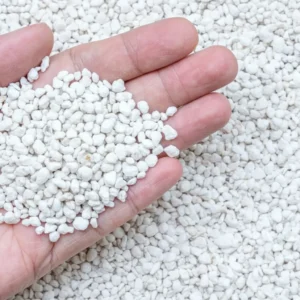
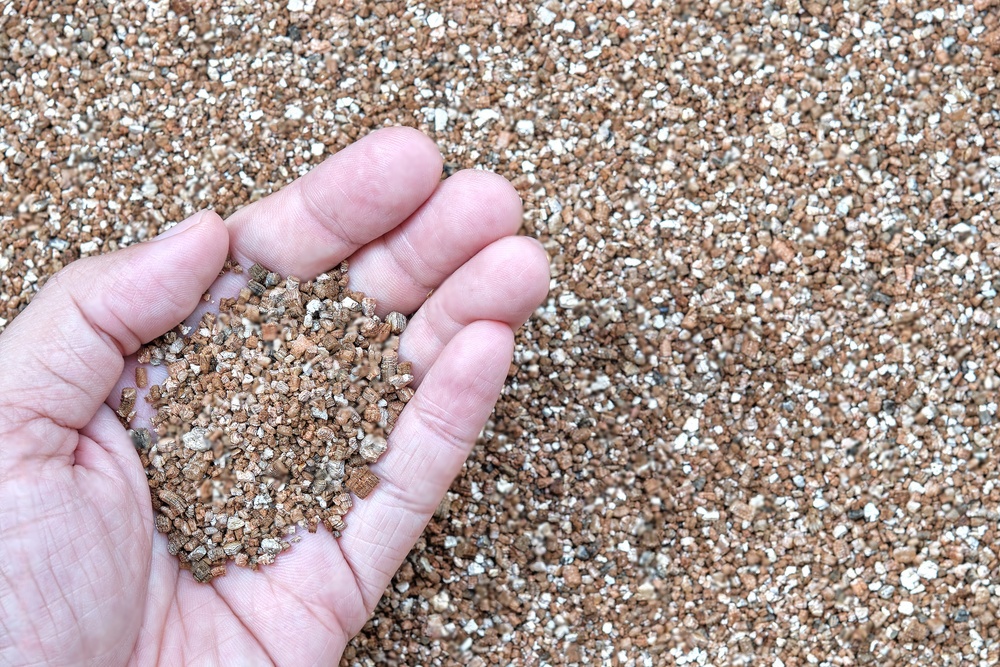
Vermiculite is a naturally occurring mineral widely used in horticulture, seed propagation, and container cultivation because of its exceptional ability to retain water and nutrients. It is produced by heating raw vermiculite ore at high temperatures, causing the mineral to expand into lightweight, porous granules. The expanded material is sterile, lightweight, and highly absorbent, making it useful in many growing applications. In bonsai cultivation, vermiculite is primarily valued as a supplemental substrate component that improves moisture retention and supports root development, especially during propagation and early growth stages.
The structure of vermiculite is one of its most important characteristics. When heated, the mineral expands into layered particles containing numerous air spaces. These particles are capable of absorbing large quantities of water while still maintaining moderate aeration within the soil. Unlike dense organic soils that may compact over time, vermiculite remains relatively open and lightweight. This balance between water retention and air circulation makes it particularly useful for young plants, seedlings, and cuttings that require consistently moist conditions to establish healthy roots.
One of the main advantages of vermiculite in bonsai cultivation is its ability to hold moisture. Bonsai trees are grown in shallow containers where soil dries out rapidly, especially during hot weather or in windy conditions. Vermiculite acts as a moisture reservoir by absorbing water and gradually releasing it back into the surrounding substrate. This buffering effect reduces sudden fluctuations in soil moisture and helps protect delicate roots from drying out too quickly. For species that prefer more consistent moisture, vermiculite can contribute to healthier and more stable root conditions.
In addition to water retention, vermiculite also has a high cation exchange capacity, often abbreviated as CEC. This means it can hold positively charged nutrient ions such as potassium, magnesium, and calcium, making these nutrients more available to plant roots over time. In bonsai cultivation, where nutrients are frequently washed out by regular watering, this property can help improve fertilizer efficiency and reduce nutrient loss from the soil. Vermiculite itself contains small amounts of magnesium and potassium, although these are not usually sufficient to meet all plant nutritional needs.
Because it is sterile and chemically stable, vermiculite is particularly useful for propagation work. Seeds, cuttings, and newly rooted plants benefit from the consistent moisture and clean growing environment it provides. Fine roots can develop easily within vermiculite because the particles are soft and lightweight, allowing roots to spread with minimal resistance. Many bonsai growers use vermiculite in propagation trays or seed-starting mixes together with perlite, peat, coco coir, or fine bark.
In established bonsai cultivation, vermiculite is rarely used alone. Instead, it is incorporated in small proportions into mixed substrates. Common bonsai soil ingredients such as akadama, pumice, lava rock, kiryu, bark, or coarse sand provide structural stability and drainage, while vermiculite contributes moisture retention and nutrient-holding capacity. The exact ratio depends on the species being grown, the climate, and the grower’s watering practices. Deciduous trees and tropical species may benefit from slightly higher amounts of vermiculite, while conifers such as pines and junipers generally require much sharper drainage and therefore only minimal amounts.
One of the most common uses of vermiculite in bonsai is during the early development phase of seedlings and pre-bonsai material. Young plants often require more stable moisture levels than mature bonsai trees. Vermiculite helps create a favorable environment for vigorous root production, which is essential during the establishment period. It is also commonly used when recovering weak or recently repotted trees because it reduces water stress and encourages fine root growth.
Despite its benefits, vermiculite also has limitations in bonsai cultivation. Its greatest weakness is that it retains large amounts of water, which can become problematic if overused. Bonsai species that require excellent drainage, particularly many conifers and Mediterranean species, may suffer from root rot if the substrate remains too wet for extended periods. For this reason, experienced bonsai growers usually use vermiculite sparingly and combine it with coarser inorganic materials to maintain proper aeration.
Another limitation is that vermiculite particles gradually break down over time. Repeated watering and root growth can compress the particles into finer material, reducing airflow within the substrate. In long-term bonsai cultivation, this breakdown may eventually contribute to soil compaction. As a result, vermiculite is often more suitable for propagation, temporary culture, or young plants than for highly refined mature bonsai specimens that require extremely stable substrate structure.
Vermiculite is also extremely lightweight, which can reduce pot stability in shallow bonsai containers, especially outdoors in windy conditions. For this reason, it is generally used as a minor additive rather than a dominant substrate component.
Overall, vermiculite is a valuable horticultural material that offers significant benefits for bonsai propagation, seed starting, and moisture management. Its ability to retain water and nutrients while supporting fine root growth makes it particularly useful during early developmental stages and recovery periods. When used carefully and combined with well-draining inorganic materials, vermiculite can help create a balanced root environment that supports healthy bonsai growth and root development.
Additional information
| Weight | 3 kg |
|---|
Related products
-
SOLD OUT
 Select options This product has multiple variants. The options may be chosen on the product page
Magnesium Sulfate (Epsom Salt) 1Kg
7,99 €