


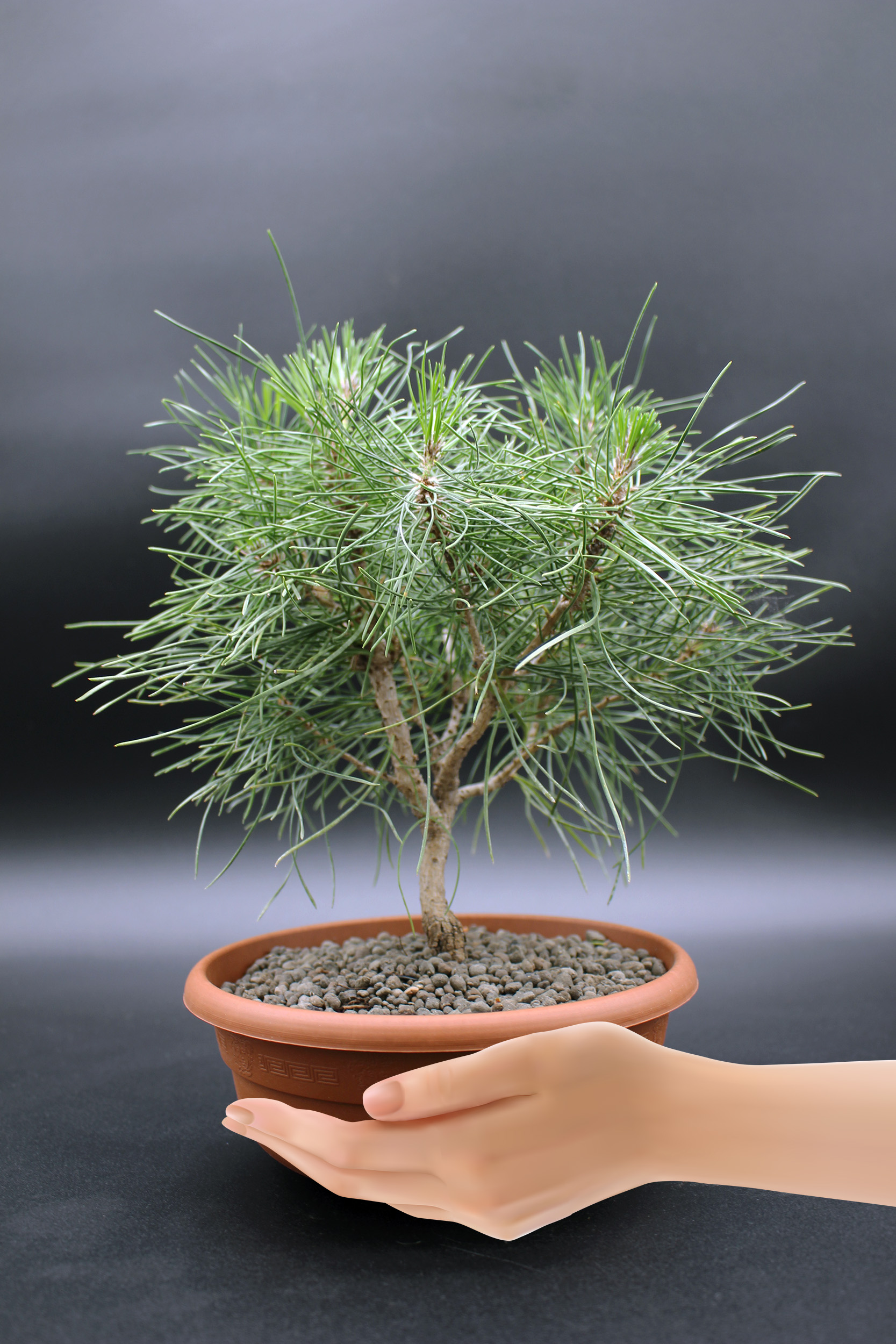
Pinus Thunbergii – Japanese Black Pine Pre Bonsai
49,99 €
Pinus Thunbergii – (Japanese Black Pine) Pre Bonsais in different sizes and shapes. The plants are pruned 1-2 times per year to ensure a compact shape and shorter needles.
Description
Pinus thunbergii, commonly known as Japanese black pine, is one of the most respected and iconic species in bonsai cultivation. Valued for its rugged bark, strong trunk development, and ability to convey age and power, it has become a cornerstone of traditional Japanese bonsai art. As a pre bonsai, Pinus thunbergii represents the critical developmental stage where the foundations of a future bonsai are created. During this phase, the tree is not yet refined or display-ready, but it already possesses the structure, health, and potential that will eventually define the finished bonsai.
A prebonsai Japanese black pine is usually a young tree that has undergone some initial training but still requires years of development. It may originate from seed, cutting, grafting, or nursery stock, and it is often grown in larger containers, training pots, or even in the ground to accelerate trunk thickening and root development. At this stage, the focus is not on fine refinement or detailed ramification, but on building the essential characteristics that make a convincing bonsai possible.
One of the most important qualities being developed in a Pinus thunbergii pre bonsai is the trunk. In bonsai, the trunk creates the visual impression of age, stability, and strength. Japanese black pine is especially prized because it develops thick, rugged trunks with dark fissured bark as it matures. Even relatively young prebonsai can begin showing rough bark texture after several years of vigorous growth. Growers often encourage rapid trunk thickening by allowing sacrifice branches to grow freely. These branches increase energy flow and trunk expansion without becoming part of the final design.
Movement in the trunk is another essential feature established during the pre bonsai stage. Young Japanese black pines are flexible enough to be wired and shaped early in their development. Bends and curves are introduced while the trunk is still soft, creating dynamic lines that mimic trees shaped by wind, weather, and age in nature. Once the trunk hardens, dramatic shaping becomes far more difficult, so these early years are critical in defining the future character of the bonsai.
Root development also receives major attention during the prebonsai phase. Bonsai aesthetics rely heavily on nebari, the visible surface root spread that anchors the tree visually and creates a sense of maturity. In Japanese black pine, careful root pruning and positioning during repotting help develop radial roots that spread evenly around the trunk. Young trees are often repotted regularly to prevent circling roots and encourage a flat, stable root system suitable for shallow bonsai containers later in life.
The foliage of Pinus thunbergii contributes significantly to its appeal. The species produces long, dark green needles in pairs, giving the tree a bold and masculine appearance. On young pre bonsai material, the needles are often relatively long and coarse because the tree is being grown vigorously for development. As refinement progresses in later years, techniques such as candle pruning, needle thinning, and balanced feeding help reduce needle length and improve density. During the prebonsai stage, however, strong growth is generally encouraged to accelerate structural development.
Branch selection is another major task during pre bonsai cultivation. Young black pines often produce many shoots, but only some will become primary branches in the future design. The grower studies the tree carefully to determine which branches contribute to the overall composition and which should be removed. Primary branches are usually positioned with wire while still flexible, creating the basic framework of the future bonsai. The goal is to establish balance, depth, and movement while avoiding excessive congestion.
Japanese black pine prebonsai are commonly grown in large containers or training boxes because unrestricted root space encourages vigorous growth. Some growers plant them directly in the ground for several years to accelerate trunk thickening even further. Trees grown this way can develop impressive trunks relatively quickly compared to container-grown specimens. Once sufficient thickness and taper are achieved, the tree is lifted and transferred back into a training container for more controlled development.
Soil composition plays an important role in maintaining healthy pre bonsai growth. Pinus thunbergii prefers a free-draining soil mix that allows oxygen to reach the roots while retaining enough moisture to support vigorous growth. Bonsai soils typically include akadama, pumice, and lava rock. Good drainage is especially important because pines are sensitive to waterlogged conditions, which can lead to root rot and weakened health.
Watering practices for prebonsai black pines must balance moisture with airflow. The soil should dry slightly between waterings but never remain completely dry for extended periods during active growth. Because pre bonsai are often grown vigorously, they may require more frequent watering than refined bonsai in smaller pots.
Fertilization during the prebonsai stage is generally heavier than during refinement. Strong feeding supports trunk growth, root development, and overall vigor. Organic fertilizers are often preferred because they release nutrients gradually and promote healthy microbial activity in the soil. Healthy, vigorous growth during this stage lays the groundwork for future refinement.
Sunlight is essential for Japanese black pine. Full sun encourages compact growth, strong buds, and healthy needle color. Trees grown in insufficient light tend to weaken, produce elongated growth, and lose vigor. Good airflow is also important to reduce fungal problems and maintain overall health.
The transformation from young pine to mature pre bonsai takes time. Over several years, the tree begins to develop taper, bark texture, branch structure, and a more convincing silhouette. While it may still lack the fine ramification and detailed refinement of a finished bonsai, it already contains the essential architecture of the future tree.
Many bonsai artists consider the prebonsai stage the most creative part of development because it involves making the major structural decisions that determine the tree’s future identity. Every cut, bend, and sacrifice branch influences the eventual outcome. Mistakes made during this phase can take years to correct, while thoughtful planning can produce extraordinary material with strong artistic potential.
Japanese black pine is especially rewarding because it responds so well to long-term development. Over time, the rough bark deepens, the trunk gains character, and the branch structure becomes more refined. Even as a pre bonsai, Pinus thunbergii often carries a sense of age and strength uncommon in many other species.
In bonsai culture, the journey from seedling to finished tree can take decades, and the prebonsai stage represents the bridge between raw material and artistic refinement. A Pinus thunbergii pre bonsai is therefore not simply an unfinished tree. It is the foundation of a future living sculpture, shaped gradually through horticultural skill, patience, and vision. With careful cultivation and time, it can eventually become a bonsai that reflects the rugged beauty and enduring strength of ancient pines found in nature.
Scientific name: Pinus Thunbergii
Common Name: Japanese Black Pine
Origin: Japan
Stage of development: Pre Bonsai
Delivery form: Bonsai pot ⌀ 17 cm
Additional information
| Weight | 3 kg |
|---|---|
| Number | # 1, # 2, # 3, # 4, # 5 |
Related products
-
 Select options This product has multiple variants. The options may be chosen on the product page
Crassula Ovata Pre Bonsai – (Jade plant)
29,99 € – 49,99 € -
 Select options This product has multiple variants. The options may be chosen on the product page
Chinese Kishu Juniper Pre Bonsai (Juniperus Chinensis Kishu)
49,99 € -
SOLD OUT
 Select options This product has multiple variants. The options may be chosen on the product page
Ficus Microcarpa ‘Tiger Bark’ Pre Bonsai
49,99 €