


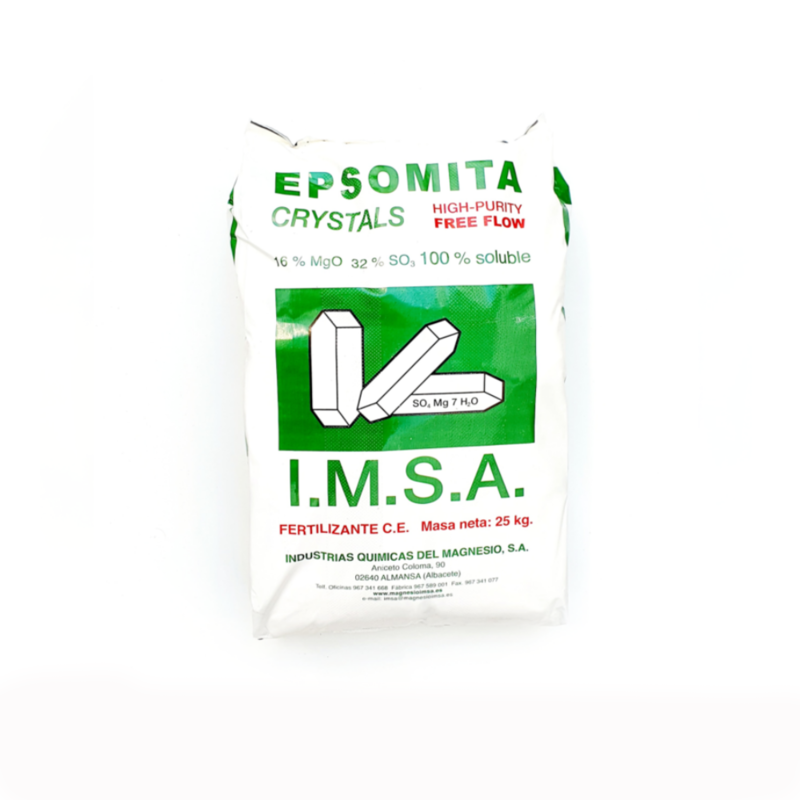
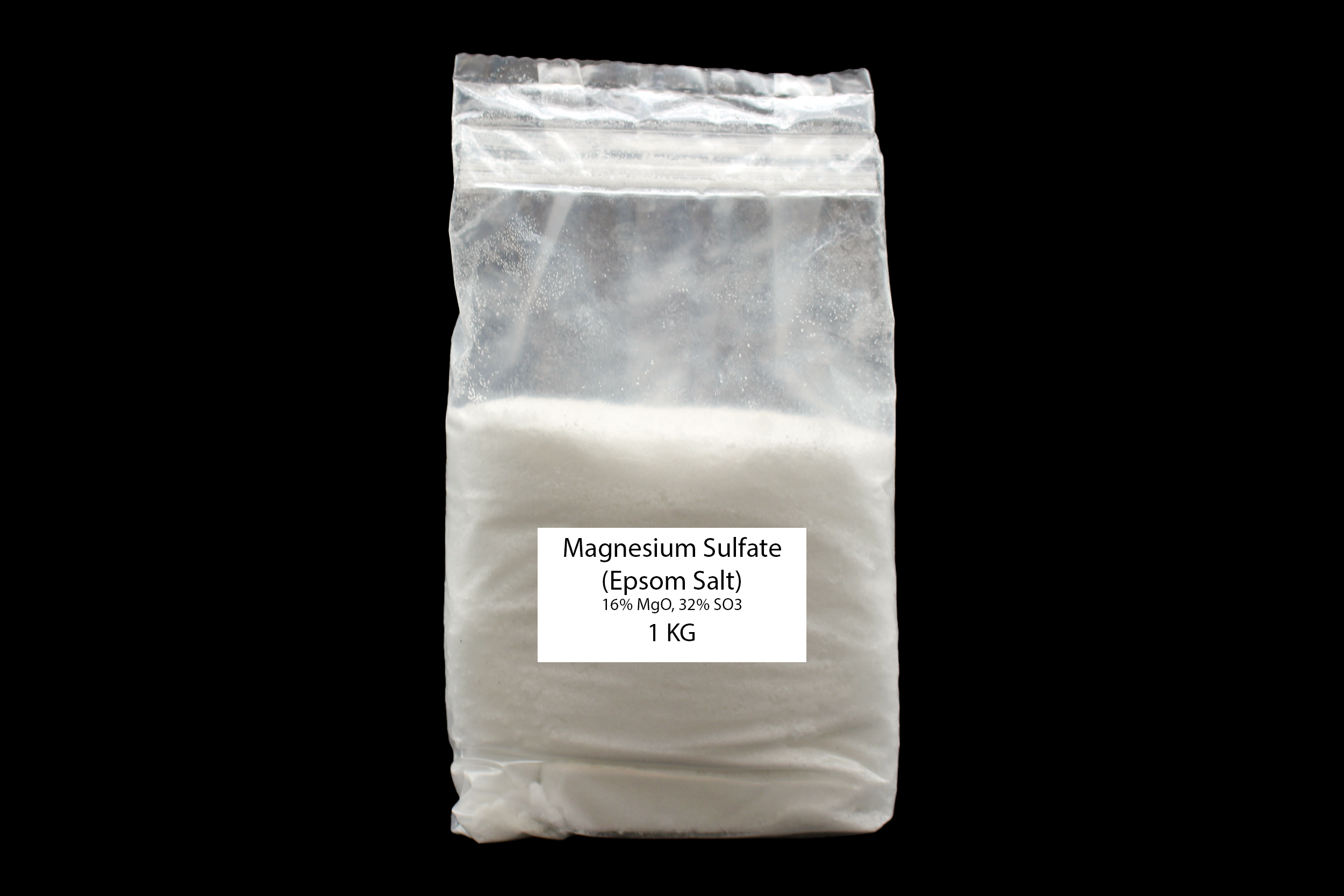
Magnesium Sulfate (Epsom Salt) 1Kg
7,99 €
Magnesium Sulfate (Epsom Salt) 1 Kg
Description
The Use of Magnesium Sulfate as a Fertilizer supplement for Conifers
Magnesium sulfate, commonly known as Epsom salt, is a valuable supplemental fertilizer for conifers such as Chinese junipers (Juniperus chinensis), Cypress and pine trees (Pinus species). While it is not a complete fertilizer, it plays an important role in correcting magnesium deficiencies and improving overall plant health, especially in soils that are sandy, acidic, or heavily leached.
Magnesium is an essential secondary nutrient for all plants. It is a central component of chlorophyll, the molecule responsible for photosynthesis. Without sufficient magnesium, conifers are unable to efficiently convert sunlight into energy, leading to reduced growth and vitality. Sulfur, the second nutrient supplied by magnesium sulfate, is also essential for protein synthesis and enzyme activity. Together, these nutrients support healthy metabolic processes in coniferous trees.
Magnesium deficiency in conifers often appears as yellowing or chlorosis of older needles while the needle tips and veins may remain green. In pines, this can result in premature needle drop and sparse crowns, while in Chinese junipers it may cause dull coloration, reduced vigor, and slowed growth. These symptoms are most common in acidic soils, soils high in potassium or calcium, or areas with frequent irrigation or rainfall, which can wash magnesium out of the root zone.
Applying magnesium sulfate can quickly correct these deficiencies because it is highly water-soluble and readily absorbed by plant roots. For established conifers, magnesium sulfate is typically applied as a soil drench or broadcast evenly over the root zone and watered in thoroughly. It may also be applied as a foliar spray at low concentrations, which allows for rapid uptake through the needles, especially when visual deficiency symptoms are present. However, foliar applications should be done carefully to avoid needle burn and are best applied during cool, overcast conditions.
For Chinese junipers and pine trees, magnesium sulfate should be used as a supplement rather than a replacement for balanced fertilization. Conifers primarily require nitrogen for growth, along with adequate phosphorus and potassium. Magnesium sulfate works best when integrated into a broader nutrient management program that includes soil testing. A soil test helps confirm whether magnesium levels are low and prevents unnecessary applications, which can disrupt nutrient balance and interfere with calcium uptake.
Another advantage of magnesium sulfate is its low risk of salt buildup when applied at recommended rates. Unlike some fertilizers, it does not significantly increase soil salinity, making it suitable for sensitive conifer roots when used responsibly. Regular monitoring of soil conditions and plant response ensures that magnesium supplementation enhances health without causing nutrient imbalances.
In summary, magnesium sulfate is an effective and economical fertilizer supplement for Chinese junipers and pine trees when magnesium deficiency is present. By supporting chlorophyll production, photosynthesis, and overall metabolic function, it helps maintain deep green needle color, strong growth, and long-term conifer health. When guided by soil testing and combined with proper fertilization practices, magnesium sulfate can be a valuable tool in conifer management.
Magnesium sulfate dosage
Magnesium sulfate (Epsom salt) can be used as a supplemental fertilizer to correct magnesium deficiency, especially in conifers such as junipers and pine trees. It should not be used as a complete fertilizer, but rather as part of a balanced nutrient program.
1. Soil application (most common & safest)
For general soil application around trees and shrubs, a typical dose is about 20 to 30 grams per square meter of soil. The product should be spread evenly over the root zone, avoiding direct contact with the trunk, and then watered in thoroughly. This application is usually done once or twice per year, most commonly in spring and early summer.
2. Soil drench (faster correction)
When a quicker response is needed, magnesium sulfate can be applied as a soil drench. In this case, dissolve 10 to 20 grams of magnesium sulfate in 10 liters of water and apply the solution evenly to the soil around the roots. This method is especially useful for sandy soils, potted plants, or trees showing clear deficiency symptoms such as yellowing of older needles. Soil drenches can be repeated every four to six weeks, but no more than two or three times per growing season.
3. Foliar spray (quick but supplemental)
Magnesium sulfate may also be applied as a foliar spray for rapid, short-term correction of magnesium deficiency. A solution of 5 to 10 grams per liter of water is commonly used. The foliage should be sprayed lightly until just wet, preferably in the early morning or evening to avoid needle damage from sun exposure. Foliar applications are temporary and should be considered a supplement to soil feeding rather than a long-term solution.
4. Potted conifers
For conifers grown in containers, a lower concentration is recommended to avoid salt buildup. Dissolving about 5 grams per liter of water and applying it as a soil drench every six to eight weeks is generally sufficient. Occasional watering with plain water helps prevent excess salts from accumulating in the potting medium.
Magnesium sulfate should be applied only when a deficiency is likely or confirmed, as excessive use can interfere with calcium uptake and cause nutrient imbalance. Soil testing is recommended whenever possible to ensure proper dosing and to maintain healthy, balanced plant nutrition.
Therapeutic Uses of Magnesium Sulfate (Epsom Salt)
Magnesium sulfate is a widely used therapeutic compound in both clinical and supportive healthcare settings. It is valued for its ability to correct magnesium deficiency, regulate neuromuscular activity, and support cardiovascular and metabolic functions. Depending on the route of administration—oral, topical, or intravenous—magnesium sulfate serves different therapeutic purposes, ranging from nutritional supplementation to emergency medical treatment.
Magnesium is an essential mineral involved in hundreds of biochemical reactions in the human body. It plays a key role in nerve signal transmission, muscle contraction and relaxation, blood glucose regulation, and energy production. When magnesium levels are insufficient, individuals may experience symptoms such as muscle cramps, fatigue, irregular heartbeat, irritability, or neurological disturbances. Magnesium sulfate is often used therapeutically to restore adequate magnesium levels and relieve these symptoms.
In clinical medicine, intravenous magnesium sulfate is used in acute and critical care situations. One of its most important applications is in the management of severe magnesium deficiency, particularly when oral supplementation is ineffective or not tolerated. It is also used to stabilize abnormal heart rhythms by regulating electrical activity in cardiac muscle cells. Additionally, magnesium sulfate has a well-established role in preventing and controlling seizures in specific obstetric conditions, where its calming effect on the nervous system is crucial.
Magnesium sulfate also functions as a smooth muscle relaxant. This property makes it useful in respiratory care, where it may help reduce airway constriction by relaxing bronchial muscles. Its neuromuscular effects stem from its ability to block excessive calcium activity at nerve endings, which helps reduce muscle spasms and nerve excitability. This mechanism explains its effectiveness in treating muscle cramps, spasms, and certain neurological symptoms.
Oral magnesium sulfate has traditionally been used as an osmotic laxative. It draws water into the intestines, softening stool and stimulating bowel movements. While effective, this use requires careful supervision, as excessive intake can lead to dehydration or electrolyte imbalance. For this reason, oral magnesium sulfate is generally reserved for short-term or medically guided use rather than routine supplementation.
Topically, magnesium sulfate is commonly used in baths or compresses, often referred to as Epsom salt therapy. In this form, it is associated with muscle relaxation, stress relief, and temporary relief of soreness or inflammation. While scientific evidence on transdermal magnesium absorption is mixed, many individuals report subjective benefits such as reduced muscle tension and improved relaxation. These applications are generally considered low risk when used appropriately.
Overall, magnesium sulfate is a versatile therapeutic agent with applications that range from nutritional support to emergency medical care. Its effectiveness lies in its central role in neuromuscular stability, cardiovascular function, and metabolic regulation. When used responsibly and under appropriate guidance, magnesium sulfate remains an important and reliable tool in both preventive and therapeutic healthcare.
Typical dosage for a magnesium sulfate (Epsom salt) foot bath
-
½ cup (about 120–150 g) of magnesium sulfate
-
4–5 liters (1–1.3 gallons) of warm water
-
Soak feet for 15–20 minutes
That’s the most commonly recommended and well-tolerated ratio for relaxation, sore feet, muscle tension, or general comfort.
Additional information
| Weight | N/A |
|---|---|
| Quantity | 1 Kg |
Related products
-
 Select options This product has multiple variants. The options may be chosen on the product page
Osmocote slow-release fertilizer
1,99 € – 9,99 €