


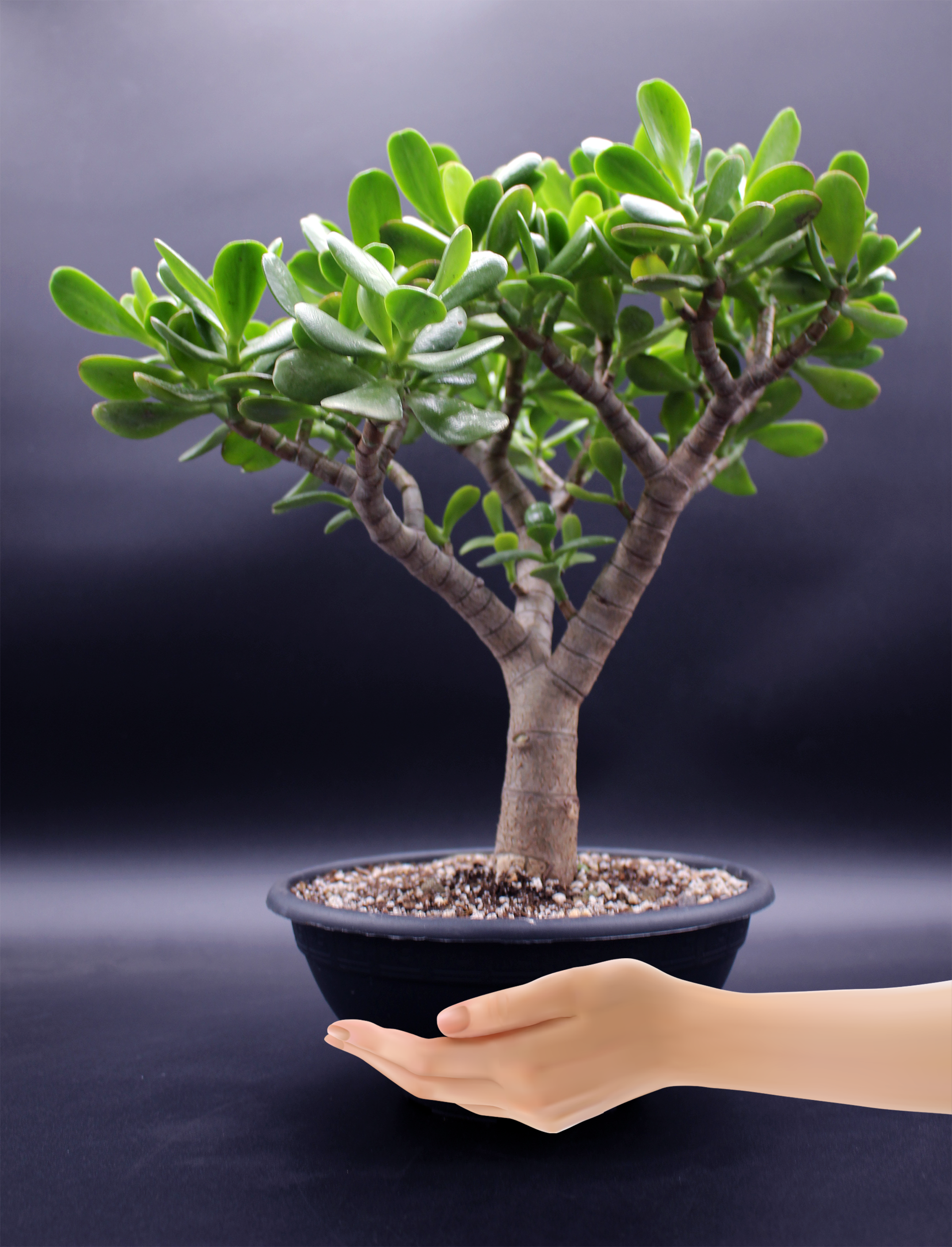
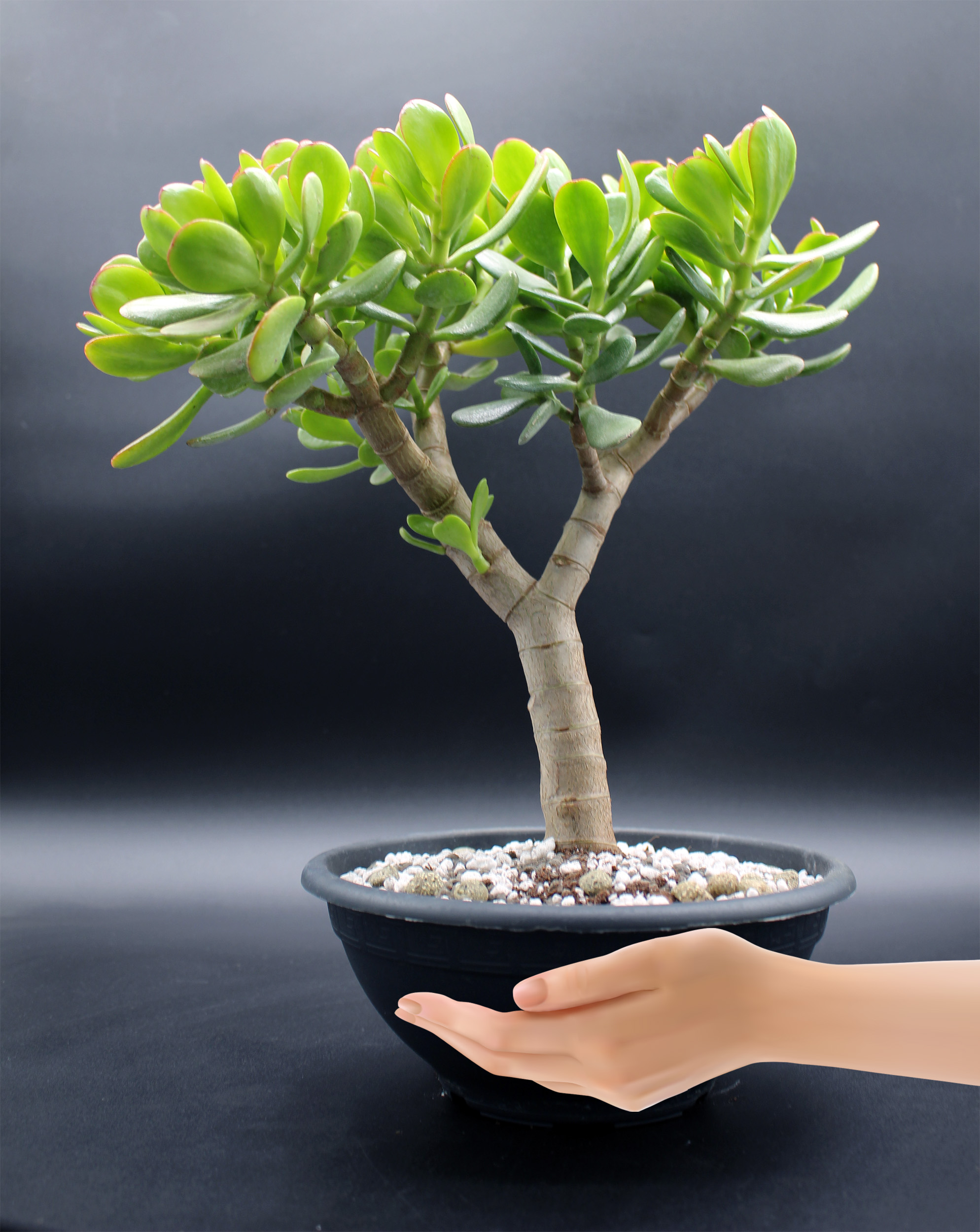
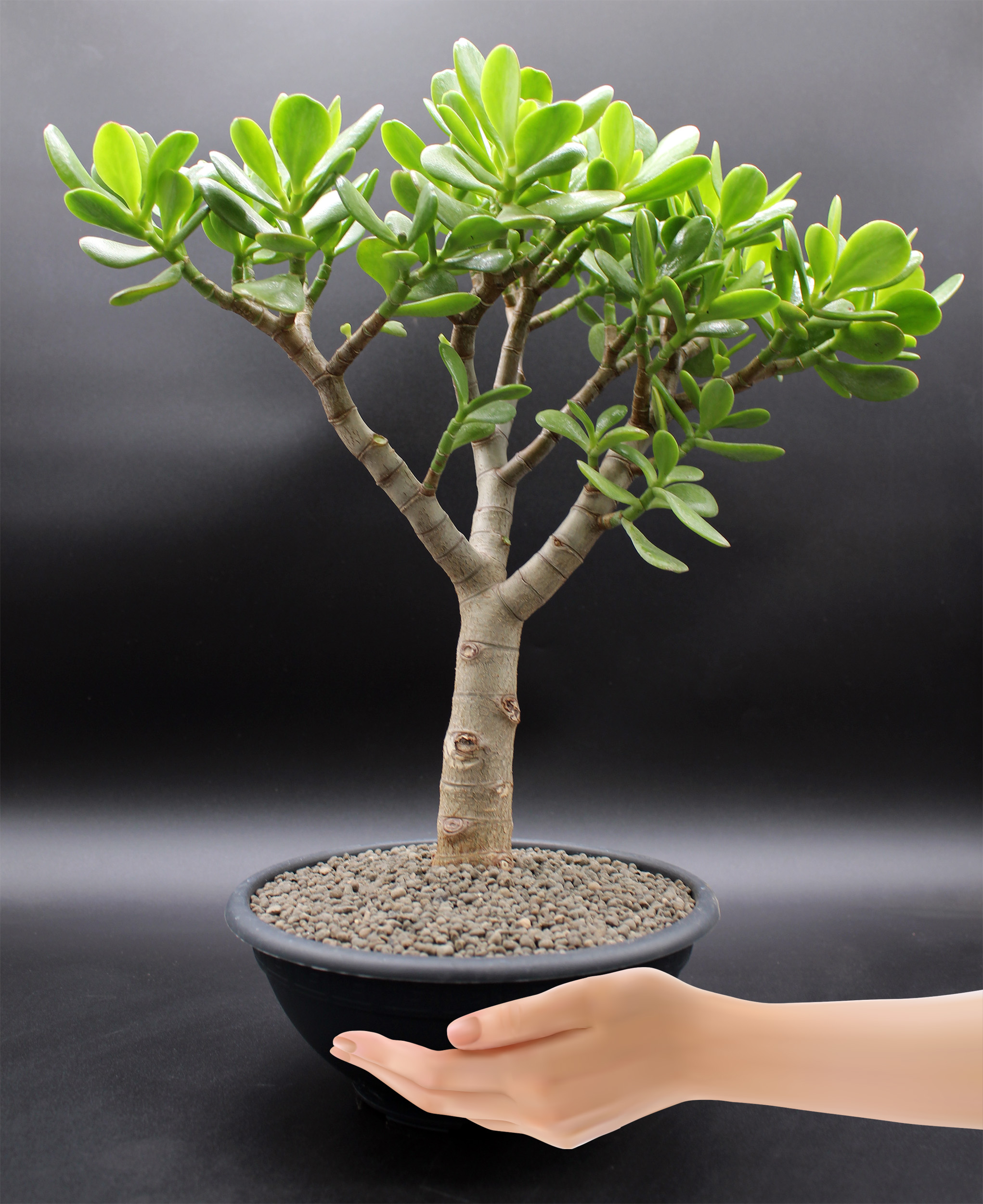
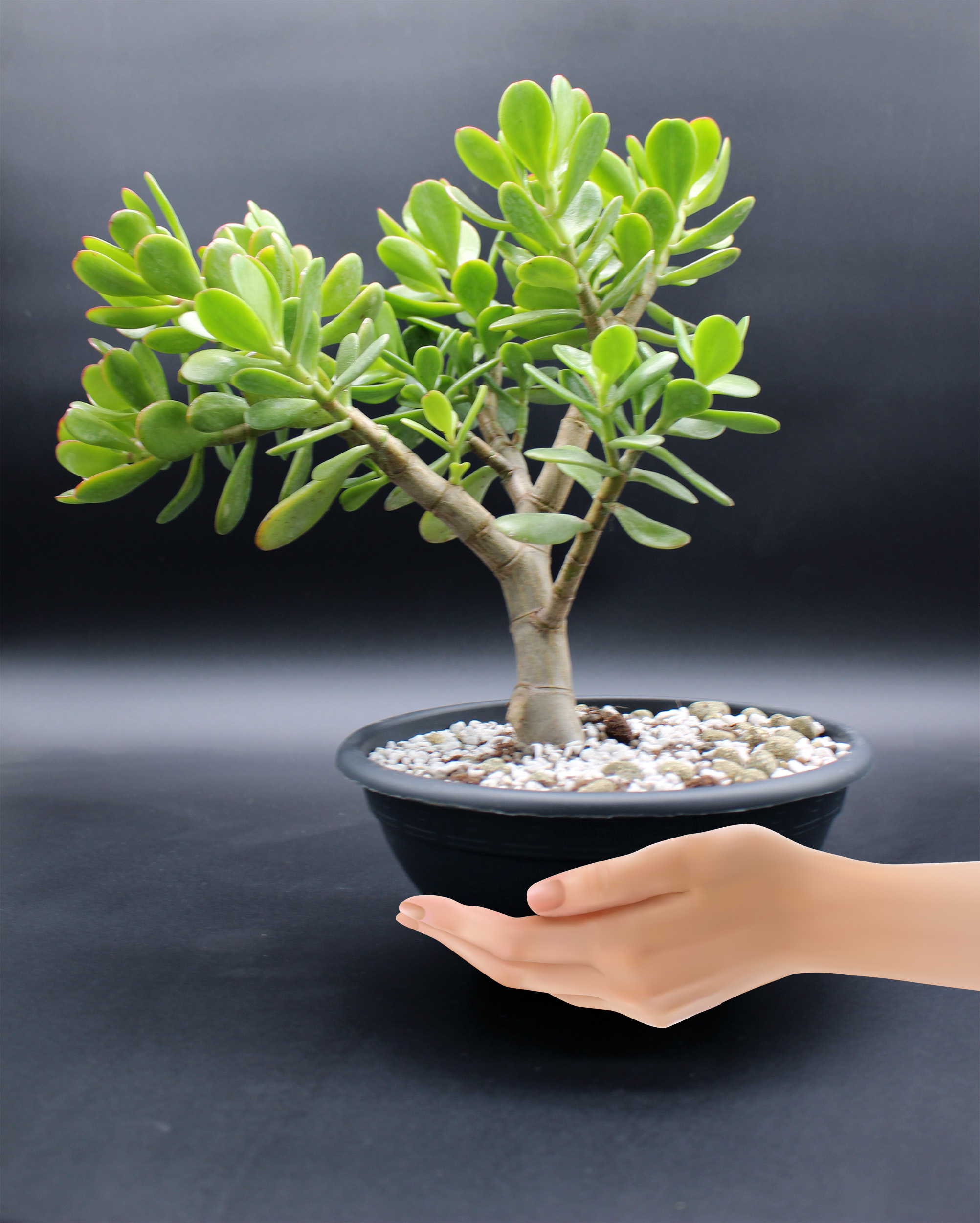
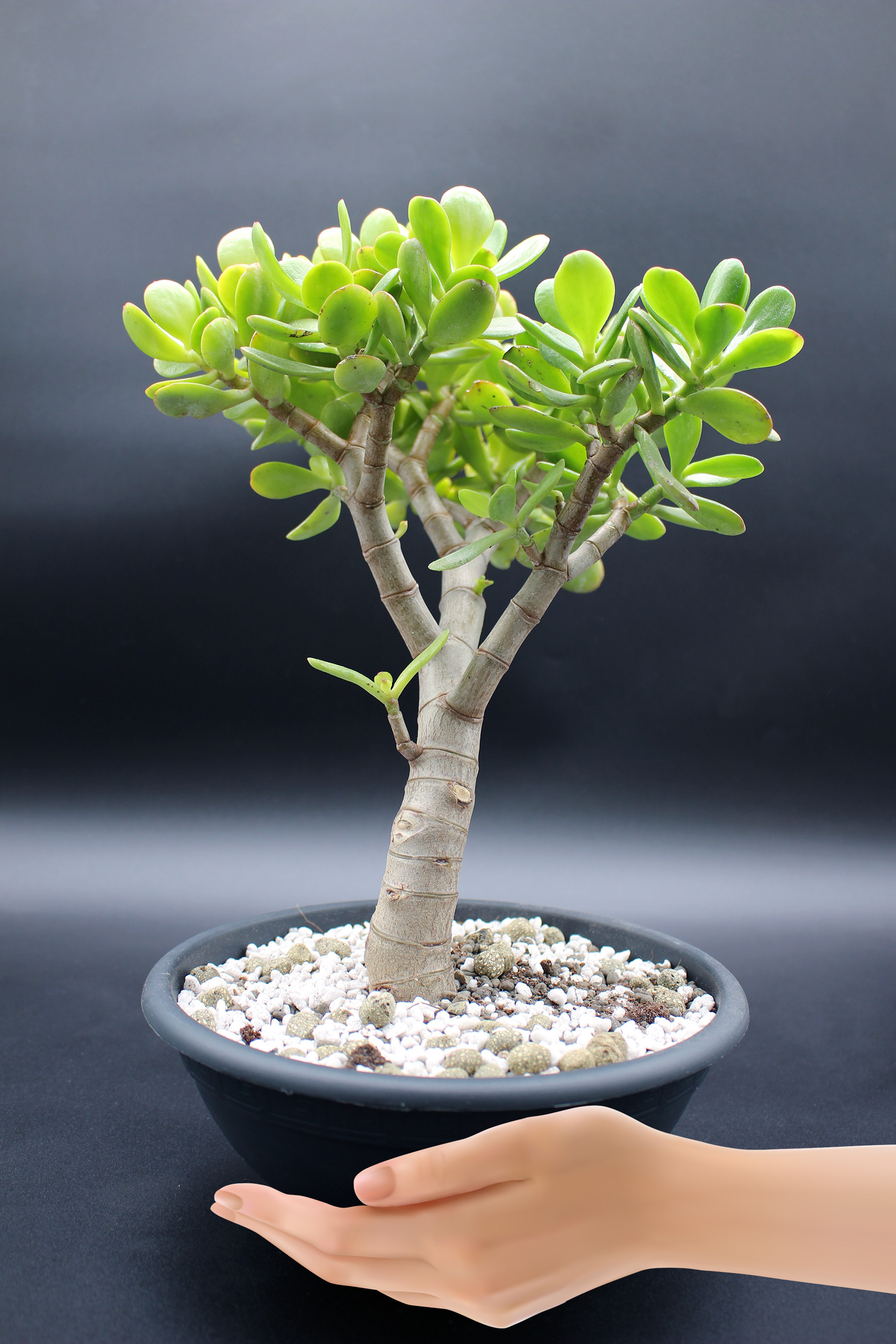
Crassula Ovata Pre Bonsai – (Jade plant)
49,99 €
Crassula Ovata – (Jadeplant) Pre Bonsais in different sizes and shapes
Description
Crassula ovata, commonly known as the jade plant, is one of the most popular succulent species used in bonsai cultivation. Native to South Africa and Mozambique, it is widely appreciated for its thick trunk, glossy leaves, and ability to develop the appearance of a miniature tree with relatively little difficulty. Although it differs from traditional woody bonsai species, Crassula ovata lends itself remarkably well to the bonsai aesthetic, offering both beginners and experienced growers a rewarding and visually distinctive subject.
Crassula ovata belongs to the Crassulaceae family, a group of succulent plants known for their ability to store water in their leaves and stems. In its natural habitat the plant grows as a small shrub, typically reaching heights of 1 to 2 meters. Over time it develops a thick, branching structure with fleshy leaves arranged in pairs along the stems. These leaves are oval-shaped, smooth, and glossy, usually bright green but sometimes edged with red when grown in strong sunlight. When cultivated as bonsai, the natural branching pattern and sturdy trunk help create the impression of a miniature tree.
One of the most attractive features of Crassula ovata as a bonsai is the development of its trunk. As the plant ages, the trunk gradually thickens and becomes woody at the base. The bark turns from green to a grayish-brown color, adding visual maturity to the plant. With careful pruning and training, the trunk can develop strong taper and movement, both essential qualities in bonsai design. Because jade plants grow relatively slowly but steadily, the trunk can gain significant character over several years.
The leaves of Crassula ovata are much larger than those of many traditional bonsai species, yet they still work well in miniature compositions because the plant naturally forms compact clusters of foliage at the ends of its branches. With proper pruning and controlled watering, the leaves can remain smaller and more proportionate to the overall design. The thick, succulent leaves also provide a pleasing contrast to the woody trunk, emphasizing the plant’s sculptural qualities.
Crassula ovata bonsai are particularly admired for their ability to mimic the form of ancient trees despite their succulent nature. When pruned regularly, the plant develops a branching structure that resembles the canopy of a mature tree. The branches divide repeatedly, creating layers of foliage that give the bonsai depth and visual complexity. Over time, a well-trained jade bonsai can display a refined silhouette with balanced proportions and a sense of stability.
Cultivating Crassula ovata as a bonsai requires an understanding of its growth habits and environmental preferences. As a succulent, it thrives in bright light and warm conditions. Ideally, the plant should receive several hours of direct sunlight each day. Adequate light encourages compact growth and enhances the red edges that sometimes appear on the leaves. Insufficient light, on the other hand, can lead to elongated stems and weak structure.
Watering practices differ from those used for many traditional bonsai trees. Because the jade plant stores water in its leaves and stems, it is important to allow the soil to dry between waterings. Overwatering can lead to root rot, one of the few serious problems this species faces. When watering is necessary, it should be done thoroughly so that water reaches the entire root system. During winter, watering frequency is typically reduced, as the plant’s growth slows during cooler months.
Soil selection is another important factor in maintaining a healthy jade bonsai. A well-draining mixture designed for succulents or cacti is ideal. Such mixes usually contain coarse materials like pumice, lava rock, or sand that allow excess moisture to drain quickly. Good aeration around the roots prevents rot and encourages healthy root development.
Pruning is the primary technique used to shape Crassula ovata bonsai. The plant responds very well to pruning, often producing multiple new shoots from a cut branch. This characteristic allows the grower to build a dense canopy and refine the overall structure of the tree. When pruning, cuts are typically made just above a leaf pair, encouraging new branches to emerge from that point. Over time, repeated pruning leads to a more compact and intricate branch network.
Unlike many woody bonsai species, jade plants are not commonly wired because their branches are brittle and can break easily when bent. Instead, shaping is usually achieved through selective pruning and directional growth. By removing unwanted branches and allowing others to develop, the grower can guide the plant toward the desired form without applying wire.
Another appealing aspect of Crassula ovata bonsai is its potential for flowering. Under the right conditions, mature plants produce clusters of small star-shaped flowers, usually white or pale pink. These blooms often appear during the cooler months of the year and add an extra layer of beauty to the bonsai. While flowering is not guaranteed in every indoor environment, it can occur when the plant experiences bright light and a period of cooler temperatures.
Propagation of jade bonsai is remarkably easy, which contributes to its popularity. New plants can be grown from stem cuttings or even individual leaves. A cutting allowed to dry for a day or two before planting will often root quickly in well-draining soil. This ease of propagation allows enthusiasts to experiment with different designs and gradually build collections of jade bonsai.
Crassula ovata also has symbolic associations in many cultures. It is often called the “money plant” or “lucky plant” and is believed to bring prosperity and positive energy. While these beliefs are cultural rather than botanical, they have contributed to the plant’s popularity as both a decorative and meaningful houseplant.
In bonsai cultivation, the jade plant represents an interesting balance between traditional techniques and succulent horticulture. It may not follow every rule associated with classic bonsai species like pine or maple, yet it can still capture the essential spirit of bonsai: the creation of a miniature tree that reflects the beauty and character of nature.
Over time, a well-cared-for Crassula ovata bonsai can develop impressive form and presence. Its thick trunk, branching structure, and glossy foliage combine to create a living sculpture that changes gradually with age. With patience and attentive care, what begins as a small succulent can evolve into a distinctive bonsai that conveys strength, balance, and quiet elegance.
Scientific name: Crassula Ovata
Common Name: Jade plant, lucky plant, money plant, money tree
Origin: South Africa
Growth height: maximum 2 meters
Stage of development: Pre Bonsai
Delivery form: Bonsai pot ⌀ 20 cm
Additional information
| Weight | N/A |
|---|---|
| Number | # 1, # 2, # 3, # 4, # 5 |
Related products
-
 Select options This product has multiple variants. The options may be chosen on the product page
Chinese Kishu Juniper Pre Bonsai (Juniperus Chinensis Kishu)
49,99 € -
 Select options This product has multiple variants. The options may be chosen on the product page
Ficus Microcarpa ‘Tiger Bark’ Pre Bonsai
49,99 €