


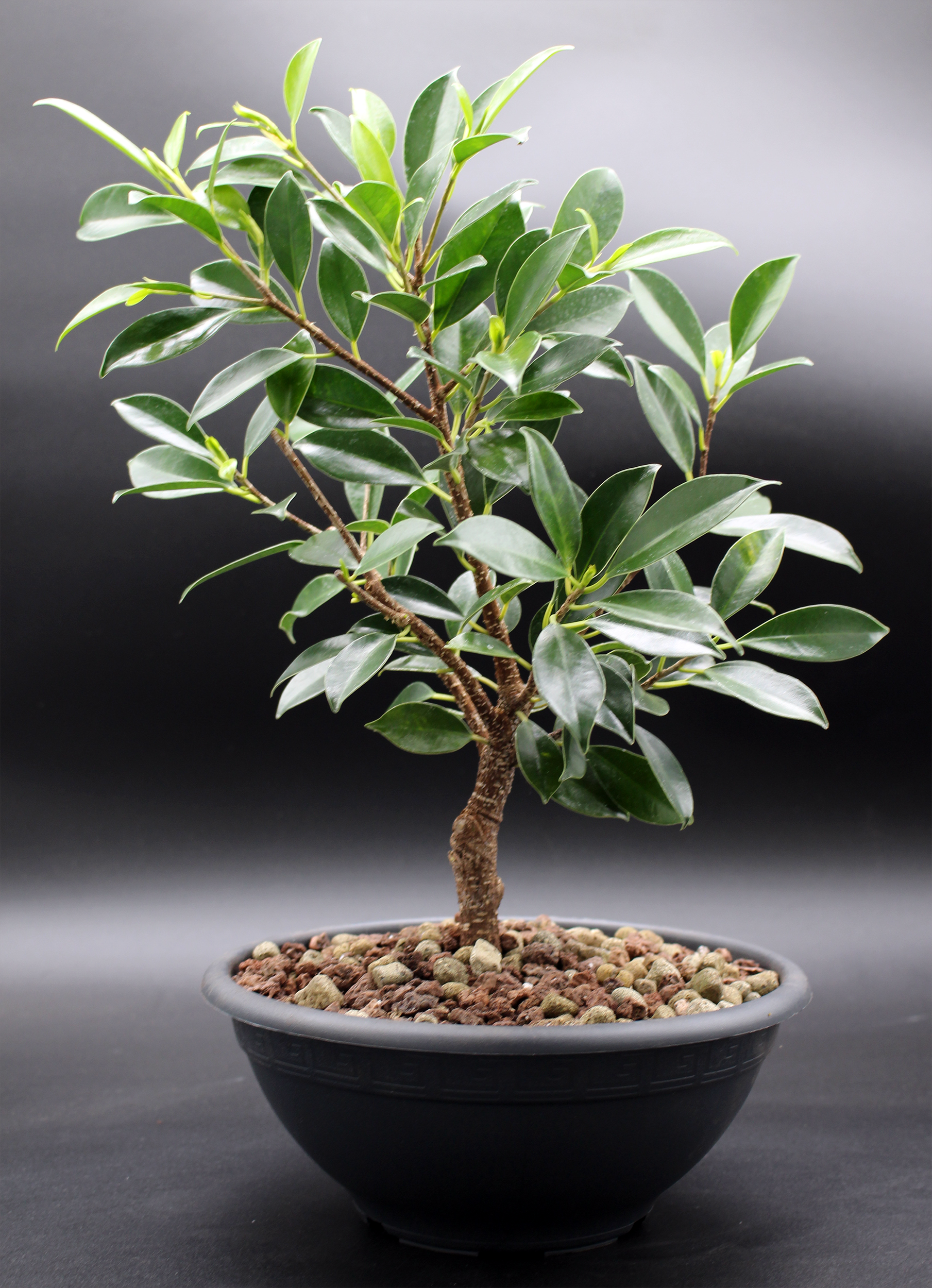
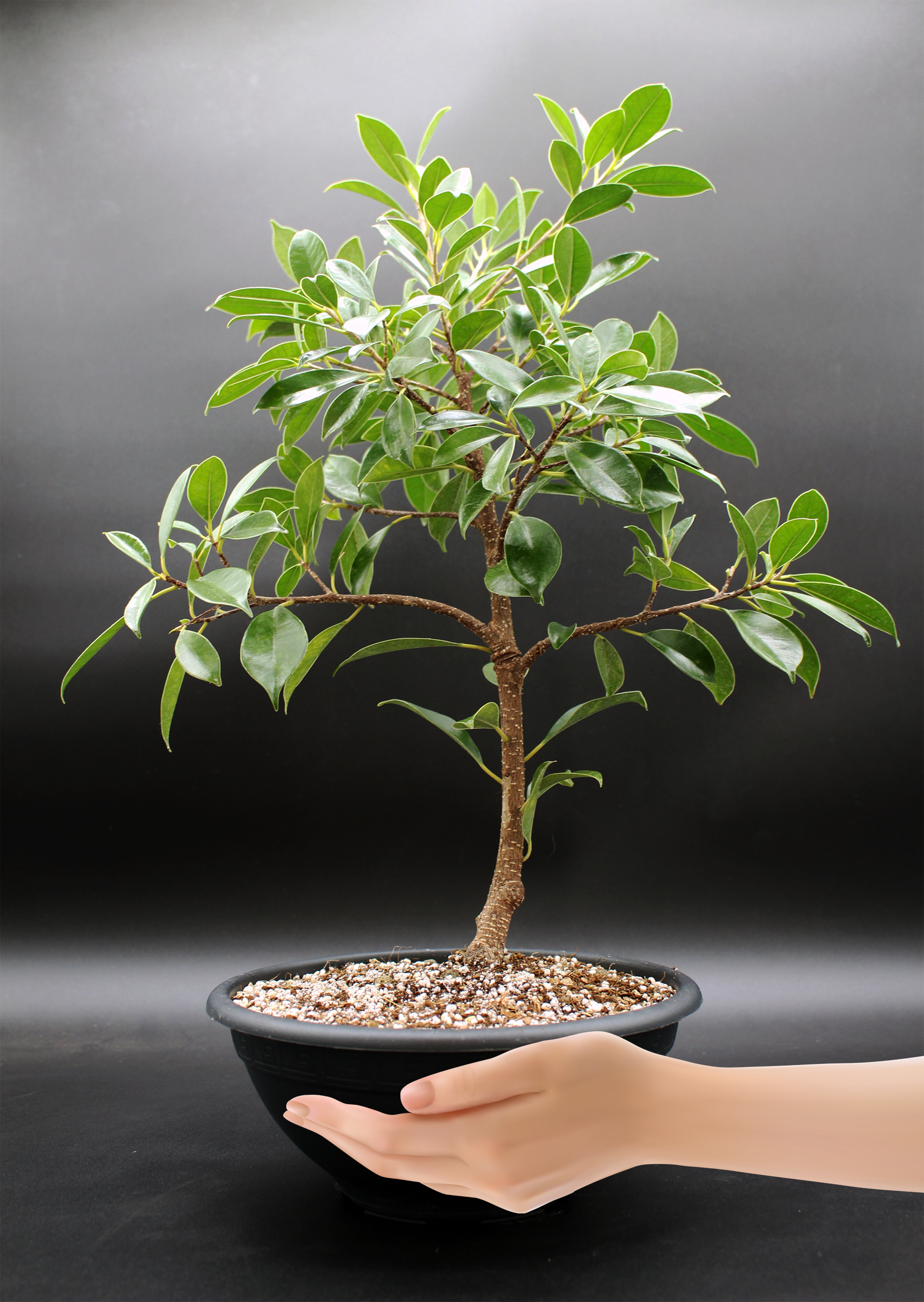
Ficus Microcarpa ‘Tiger Bark’ Pre Bonsai
49,99 €
Ficus Microcarpa ‘Tiger Bark’ Pre Bonsai in different sizes and shapes available
Description
Ficus microcarpa ‘Tiger Bark’ is a popular bonsai tree known for its unique bark, fast growth, and resilience. Native to Southeast Asia, this tropical fig species is beginner-friendly and also favored by experienced growers for its styling potential.
Key Features
The standout feature of Tiger Bark ficus is its bark — a smooth surface broken by light-colored, irregular stripes that resemble tiger markings. As the tree matures, this pattern becomes more pronounced, giving it an aged, textured appearance ideal for bonsai.
It has small, glossy, oval leaves that remain on the tree year-round. Leaf size can be reduced with regular pruning, enhancing the illusion of a miniature tree. In the right conditions, it also produces aerial roots that descend from branches. These roots can be shaped and guided to the soil, eventually forming a thick, banyan-style trunk with dramatic visual impact.
Why It’s Popular
Ficus microcarpa ‘Tiger Bark’ is one of the most widely used trees in bonsai for several reasons:
-
Toughness: It handles pruning, wiring, and repotting with minimal stress.
-
Appearance: Its bark, leaves, and aerial roots make it visually striking.
-
Adaptability: Grows well indoors or outdoors in warm climates.
-
Fast Growth: Responds quickly to training and shaping.
These qualities make it both a forgiving species for beginners and a versatile option for advanced styling.
Care Guidelines
Light:
Tiger Bark ficus thrives in bright, indirect sunlight. Outdoors, it should be shaded from harsh afternoon sun. Indoors, place it near a south- or west-facing window. Supplemental grow lights can help maintain compact growth.
Temperature and Humidity:
As a tropical plant, it prefers temperatures between 60–85°F (15–29°C). It’s not frost-hardy and must be protected when temperatures drop below 50°F (10°C). While it appreciates humidity, it tolerates average indoor conditions. Misting or humidity trays can promote aerial root growth.
Watering:
Keep the soil evenly moist but not soggy. Water thoroughly when the top inch of soil dries out. Overwatering can lead to root rot, so good drainage is key. Reduce watering in cooler months when growth slows.
Soil and Repotting:
Use a well-draining bonsai soil mix—typically a blend of akadama, pumice, and lava rock. Repot every 2–3 years in spring to refresh the soil and prune the roots. The tree recovers quickly after repotting if healthy.
Pruning and Wiring:
Regular pruning keeps the canopy tight and encourages smaller leaves. The tree tolerates heavy trimming and recovers well. Wiring is possible year-round, but the bark can scar if the wire is left on too long. Clip-and-grow techniques are often preferred.
To encourage aerial roots, increase humidity or wrap moss around the branches. Over time, these roots can be trained to thicken the trunk and enhance the tree’s character.
Fertilizing:
Feed every two weeks during the growing season with a balanced liquid fertilizer. Reduce feeding in winter if growth slows.
Styling Options
Ficus Tiger Bark adapts well to many bonsai styles:
-
Informal Upright (Moyogi): The tree’s flexible trunk suits natural, curved forms.
-
Banyan Style: Aerial roots can form thick root structures mimicking old banyan trees.
-
Root-over-rock: Its strong roots can grip rocks for a dramatic display.
-
Cascade or Semi-Cascade: While less common, its pliable branches make these styles possible.
It’s an excellent indoor bonsai, especially with proper light and stable temperatures.
Common Issues
While generally pest-resistant, indoor trees may attract spider mites, scale, or mealybugs. These can be managed with neem oil or insecticidal soap. Sudden environmental changes, especially moving the tree indoors, can cause leaf drop, but it usually rebounds.
Root rot is the main risk and results from overwatering or poor drainage. Symptoms include yellowing leaves and a musty smell from the soil. In that case, remove affected roots and repot in fresh, well-draining soil.
Ficus microcarpa ‘Tiger Bark’ is one of the most approachable yet rewarding trees in bonsai cultivation. Its distinctive bark, small leaves, and ability to grow aerial roots create a tree that looks mature and complex, even when relatively young. Add to that its toughness and forgiving nature, and you get a species ideal for both practice and display. Whether you’re starting your first bonsai or adding to an advanced collection, Tiger Bark ficus is a reliable and striking choice.
Additional information
| Weight | N/A |
|---|---|
| Number | # 1, # 2, # 3 |
Related products
-
 Select options This product has multiple variants. The options may be chosen on the product page
Chinese Kishu Juniper Pre Bonsai (Juniperus Chinensis Kishu)
49,99 € -
 Select options This product has multiple variants. The options may be chosen on the product page
Crassula Ovata Pre Bonsai – (Jade plant)
49,99 €